Article 8
Source: European Commission
Source: Own representation based on European Commission
What is Article 8 ?
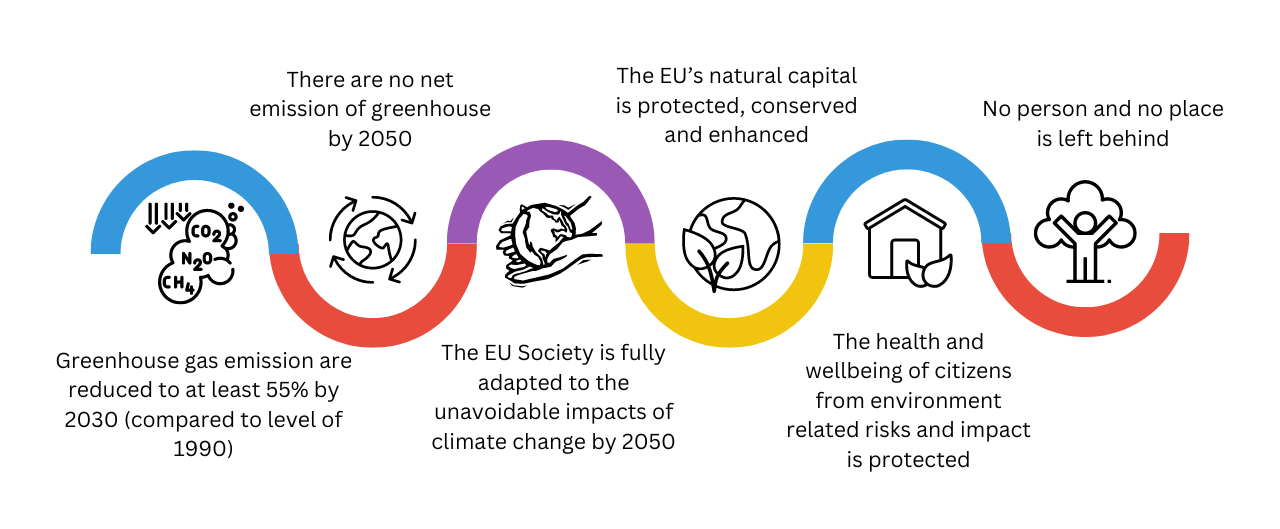
Article 8 of the Taxonomy Regulation seeks to enhance market transparency and minimise the risk of greenwashing, or false claims of environmental friendliness. It achieves this by offering investors clear and accurate information regarding the environmental performance of both financial and non-financial companies’ assets and activities. By making this information readily accessible, Article 8 not only seeks to enhance opportunities for green finance but also aims to support the funding of environmentally sustainable projects. As a result, it contributes significantly to achieving the ambitious goals outlined in the European Green Deal.
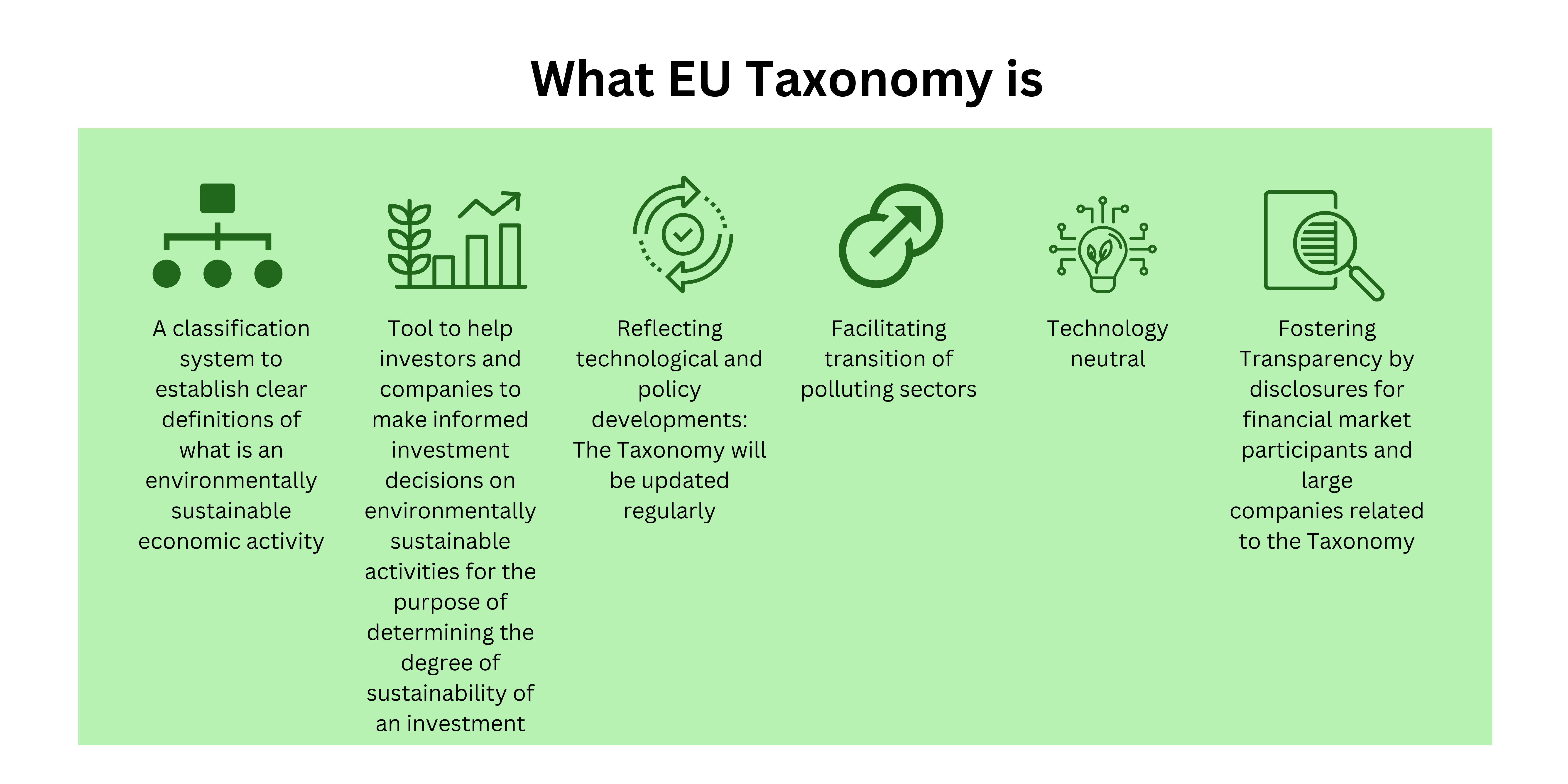
Investors can utilize the EU Taxonomy to identify economic activities that are environmentally sustainable. Its primary goal is to facilitate the transition to a zero-carbon future by directing capital toward climate solutions and initiatives designed to prevent environmental damage.
Why do we need it?
- It creates a frame of reference for investors and companies;
- It supports companies in their efforts to plan and finance their transition;
- It protects against greenwashing practices;
- It helps accelerate financing of those projects that are already sustainable and those needed in the transition.
Source: Own representation based on European Commission

Who must report?
Companies subject to the Corporate Sustainability Reporting Directive (CSRD) are obligated to disclose information on how and to what extent their activities are linked to environmentally sustainable economic practices. On the other hand, companies not covered by the CSRD have the option to voluntarily report this information, either to access sustainable financing or for other business-related purposes.
Climate and environmental objectives
The Disclosures Delegated Act defines three key performance indicators (KPIs) related to turnover, capital expenditure (CapEx) and operational expenditure (OpEx) that non-financial undertakings are required to disclose.
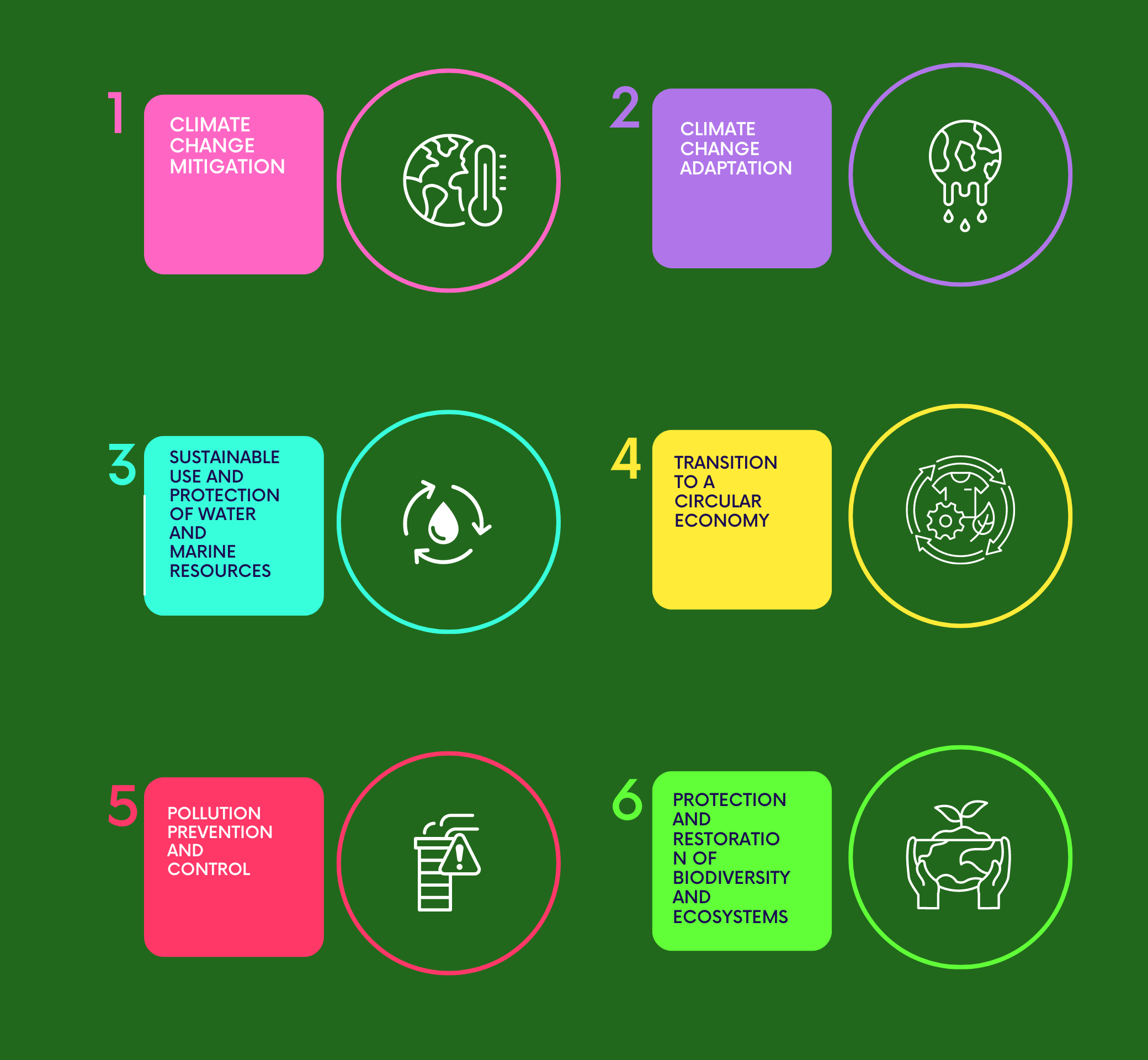
It sets out of six climate and environmental objectives:
- Climate Change Mitigation
- Climate Change Adaptation
- Sustainable use and protection of water and marine resources
- Transition to a circular economy
- Pollution prevention and control
- Protection and restoration of biodiversity and ecosystems
Source: Own representation based on European Commission
Source: Own representation based on European Commission
Criteria for an activity to be sustainable
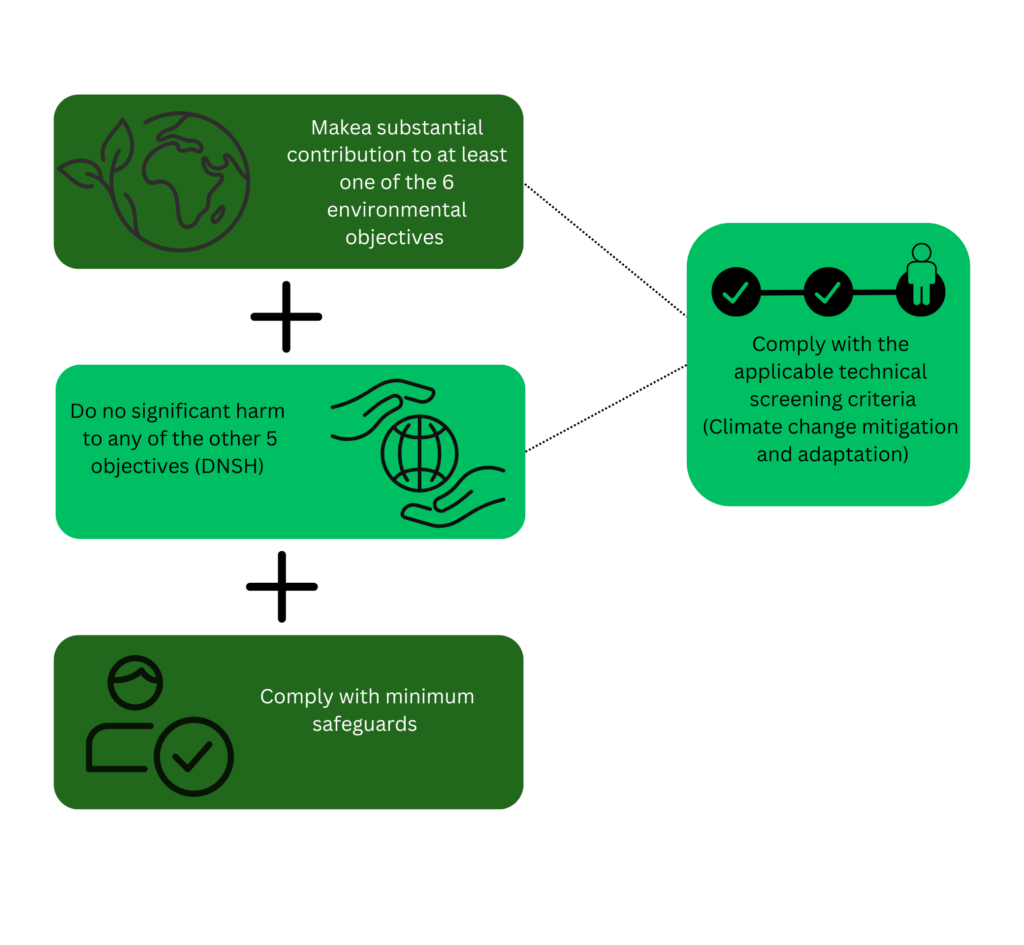
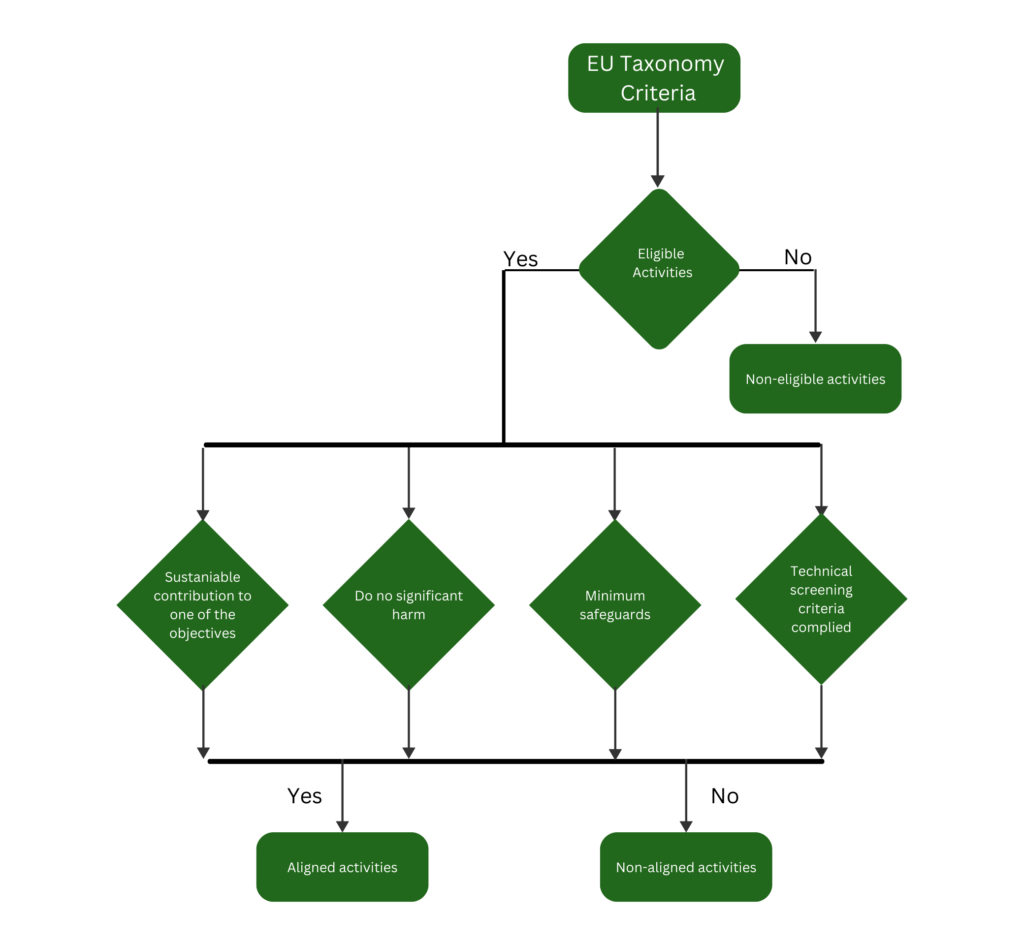
The Taxonomy Regulation specifies four key criteria that an economic activity must meet to qualify as environmentally sustainable.
- Contribution to 1 of the 6 environmental objectives
- Do no significant harm
- Minimum safeguards
- Technical screening criteria
The EU has established specific performance benchmarks, known as “technical screening criteria,” to guarantee that an economic activity significantly contributes to at least one of its environmental objectives. Furthermore, these criteria are designed to prevent any adverse impacts on the other five goals. Delegated acts outline these criteria in detail. At present, the criteria focus on activities that significantly contribute to mitigating climate change and adapting to its effects.
Source: Own representation
How to find out which activities can qualify as Taxonomy eligible?
How to find out which activities can qualify as Taxonomy eligible?
The EU Taxonomy Compass provides a visual summary of the EU Taxonomy’s content, enhancing accessibility for a wide range of users. It allows users to identify activities classified as eligible under the EU Taxonomy, comprehend their substantial contributions to specific environmental objectives, and understand the criteria necessary for these activities to achieve Taxonomy-aligned status. In addition, it underscores the importance of adhering to minimum social safeguards for an activity to qualify as Taxonomy-aligned.


How to find out which activities can qualify as Taxonomy aligned?
The EU Taxonomy Calculator provides users with a clear and practical guide to navigating the steps a non-financial undertaking must follow to complete the templates outlined in the Disclosures Delegated Act.This process, therefore, facilitates the assessment of Taxonomy-eligibility and alignment; moreover, it assists in the calculation of their key performance indicators (KPIs).