European Sustainability Reporting Standard
Source: EFRAG, Official Journal
What is ESRS?
The European Sustainability Reporting Standards (ESRS) are essential guidelines. They ensure companies within the European Union provide transparent and comprehensive information about their sustainability practices. Specifically, the ESRS mandate detailed disclosures in sustainability reports. These disclosures cover critical areas under the broad categories of Environment, Social, and Governance (ESG).
The ESRS aims to standardize sustainability reporting. This makes it easier for stakeholders, including investors, regulators, and the public, to assess and compare companies’ sustainability performance across the EU. These standards align with the broader goals of the European Green Deal. Additionally, they support other international sustainability frameworks, promoting greater accountability and transparency in corporate operations.
Why do we need it?
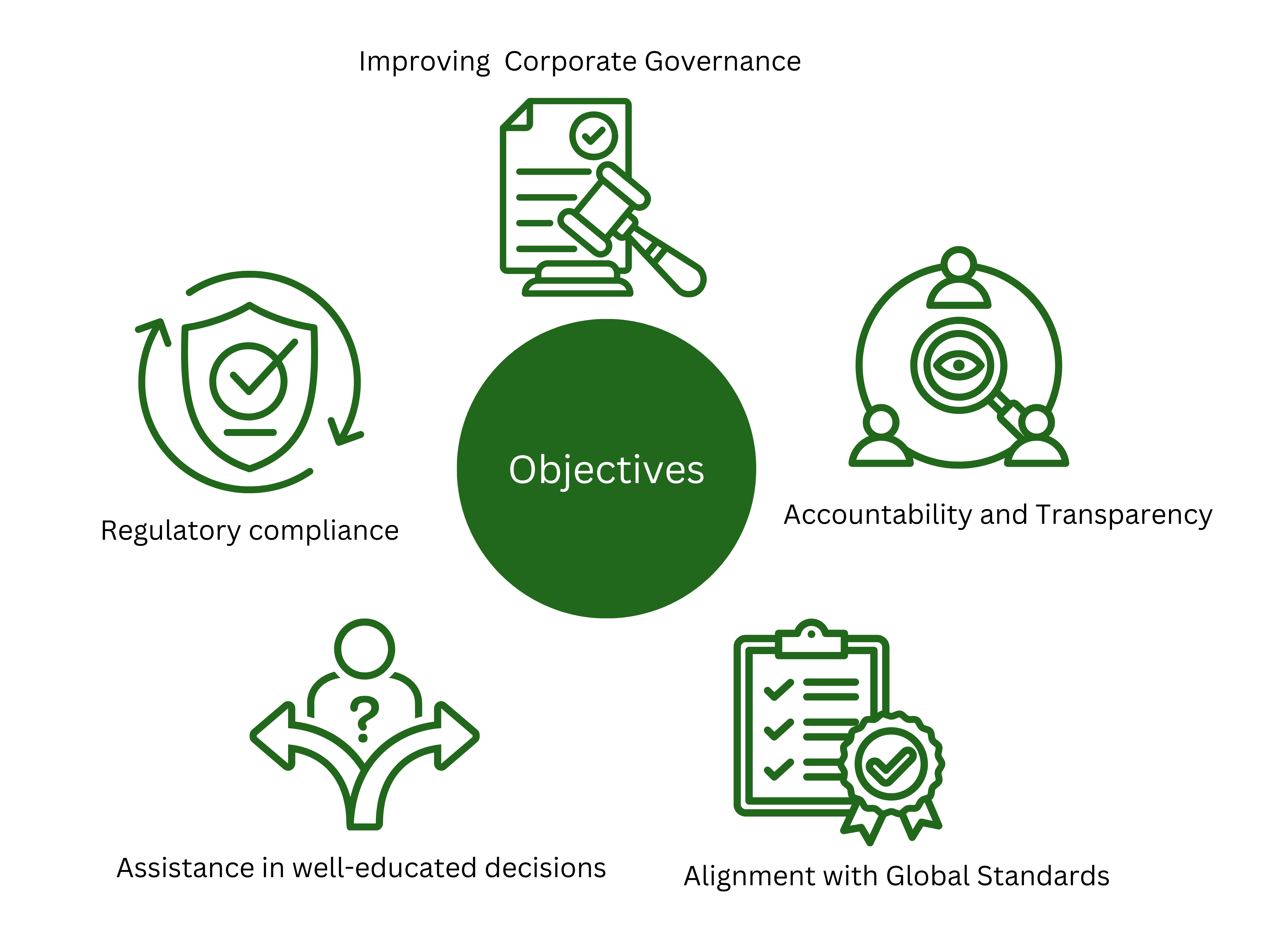
Regulatory Compliance: ESRS outlines the sustainability information companies must disclose. This is in accordance with Directive 2013/34/EU, as modified by Directive (EU) 2022/2464. By doing this, projects are guaranteed to adhere to EU sustainability reporting rules.
Accountability and Transparency: ESRS helps stakeholders understand the significant impacts projects have on people and the environment. Additionally, it shows how sustainability influences the growth, performance, and position of projects. This improves sustainability reporting’s accountability and openness.
Assistance in Making Well-educated Decisions: Using ESRS, investors, regulators, and other stakeholders can make more informed decisions. ESRS provides standardized and comparable sustainability information, helping them assess sustainability risks and opportunities related to projects.
Alignment with Global Standards: ESRS simplifies compliance for enterprises by aligning with both EU and international reporting requirements. It ensures coherence with the EU’s regulatory framework and strongly supports compatibility with global standard-setting projects.
Improving Corporate Governance: To guarantee that sustainability concerns are incorporated into business strategy and operations, ESRS places a strong emphasis on the governance processes, controls, and procedures that undertakings employ to track and manage their sustainability impacts.
Source: Own representation
Source: Own representation
Who is required to report?
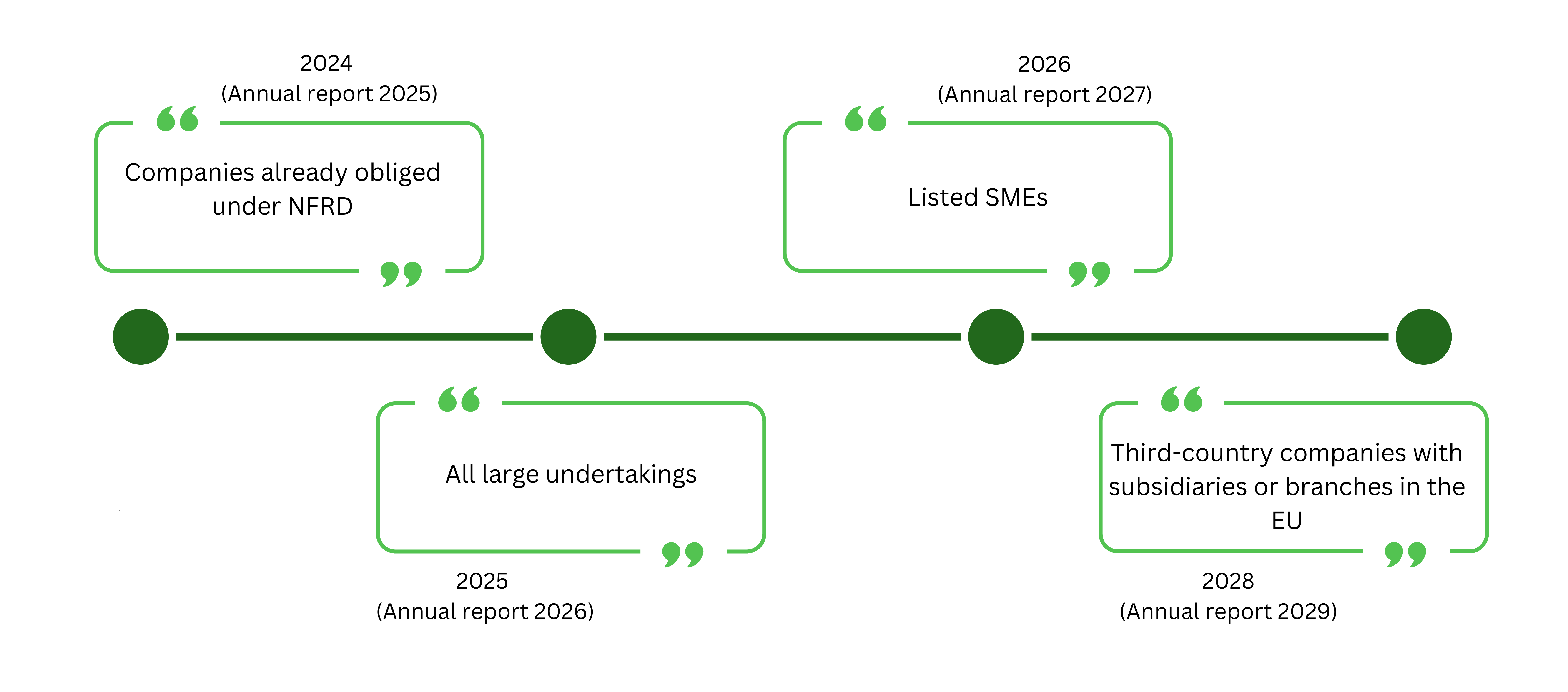
Companies subject to the Corporate Sustainability Reporting Directive (CSRD) have to implement ESRS.
The reporting requirements will be phased in over time for different kinds of companies. The ESRS, under the CSRD framework, will be gradually implemented based on factors such as company size, revenue, and geographical location.
Large Undertakings:
- Large undertakings are undertakings which on their balance sheet dates exceed at least two of the three following criteria:
- balance sheet total: EUR 25 000 000;
- net turnover: EUR 50 000 000;
- average number of employees during the financial year: 250
SMEs with Securities Admitted to Trading:
Small and medium-sized undertakings which have securities admitted to trading on a regulated market of any Member State shall prepare their sustainability statement in accordance with the ESRS. SMEs listed under EU Stock Exchange.
Categories of ESRS
ESRS is divided into 3 categories:
- Cross-Cutting Standards: Sector-agnostic standards
- Topical Standards: Sector-agnostic standards
- Sector-Specific Standards: Sector-specific standards
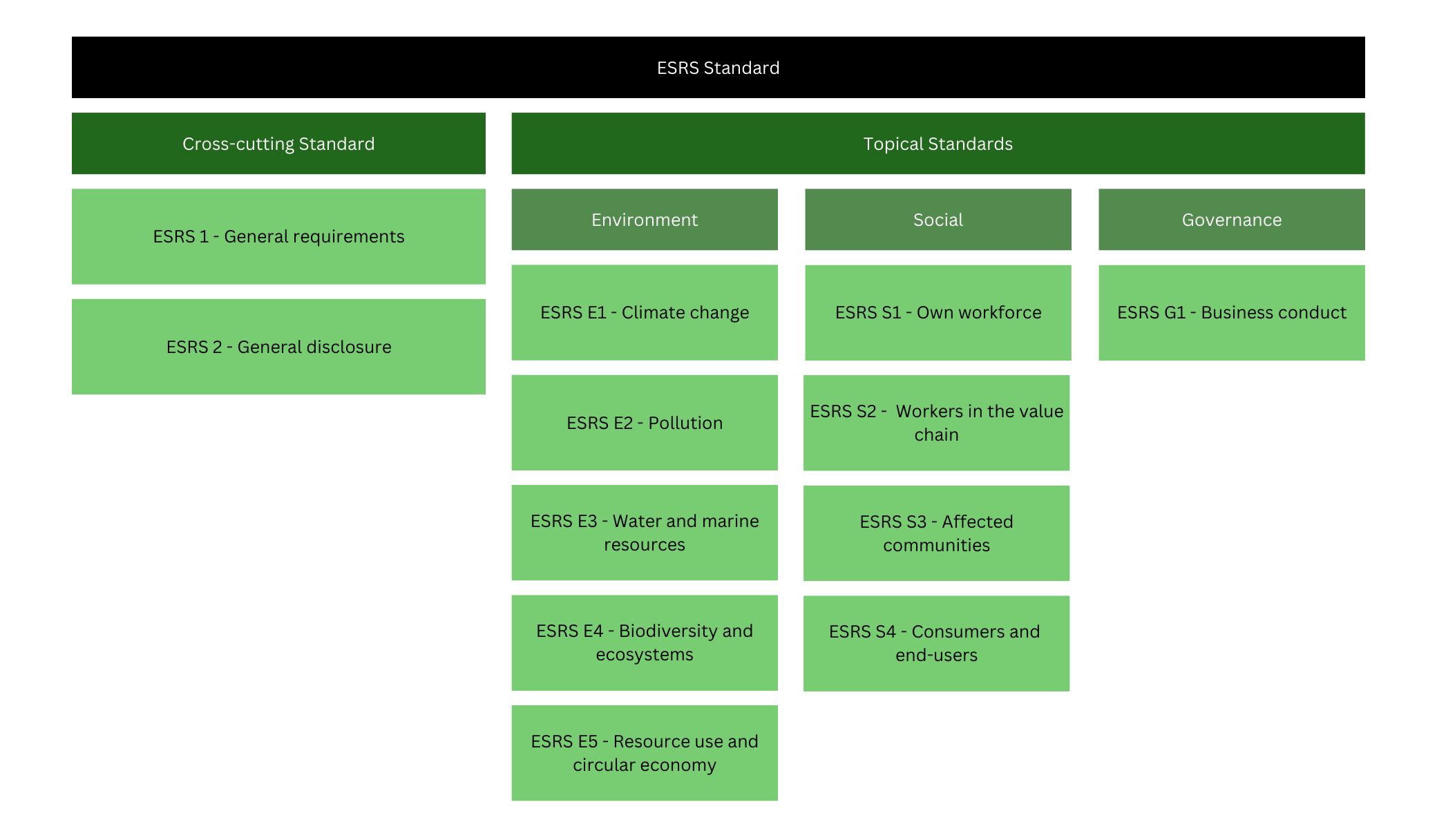
ESRS 1: It outlines the general requirements for sustainability reporting under the European Sustainability Reporting Standards (ESRS). It includes the basis for preparation, governance, strategy, impact, risk, opportunity management, and metrics and targets for sustainability matters. It emphasizes double materiality, detailing both financial and impact materiality, and provides specific disclosure requirements and illustrative appendices to guide organizations in their reporting processes.
ESRS 2: It outlines sector-agnostic disclosure requirements applicable to all sustainability topics. It mandates entities to prepare sustainability statements, detailing governance, strategy, impact, risk management, and performance metrics. These requirements aim to enhance transparency and comparability in sustainability reporting across various sectors.
ESRS E1: It outlines the requirements for reporting climate-related information. In particular, it emphasizes the importance of aligning with a 1.5°C global warming target. It also details how companies must disclose their greenhouse gas (GHG) emissions, targets, and progress. Furthermore, it provides guidelines for calculating emissions reduction targets using sector-specific or cross-sector pathways. Additionally, it underscores the need for transparency and consistency when reporting climate mitigation actions and their impacts.
ESRS E2: It outlines disclosure requirements for reporting on pollution. Specifically, it mandates companies to disclose their impacts on air, water, and soil pollution. Additionally, it requires them to report actions taken to mitigate these impacts and any related targets. Additionally, it covers substances of concern and very high concern, emphasizing transparency in managing pollution-related risks and opportunities.
ESRS E3: It outlines the disclosure requirements for managing impacts, risks, and opportunities related to water and marine resources. In particular, it mandates companies to report on their policies regarding water usage. Additionally, they must disclose actions and targets for conserving marine resources. Furthermore, they need to address efforts to mitigate water-related risks and impacts.
ESRS E4: It provides guidelines for reporting on biodiversity and ecosystem impacts. Additionally, it sets disclosure requirements for companies to report their policies, actions, and targets related to managing these impacts. Companies must also disclose risks, opportunities, and the methodologies used to assess these impacts.
ESRS E5: It sets disclosure requirements for companies to report on their use of resources and circular economy practices. It focuses on policies, actions, targets, and impacts related to resource inflows and outflows, including waste management.
ESRS S1: It outlines disclosure requirements for companies to report on managing their workforce. This includes policies, impacts, risks, and opportunities. It also covers employee engagement, diversity, wages, social protection, health and safety, training, and work-life balance. Together, these measures ensure transparency and compliance with international labor standards.
ESRS S2: It outlines disclosure requirements for companies to report on their impacts on workers in upstream and downstream value chains. Specifically, it mandates transparency about policies, engagement processes, and remediation efforts. Companies must also disclose actions taken to address both negative and positive impacts on these workers. This ensures comprehensive reporting on labor practices and related risks and opportunities in the value chain.
ESRS S3: It specifies disclosure requirements for companies to report on their impacts on local communities. It provides guidelines for managing and mitigating negative impacts. Additionally, it emphasizes engaging with affected communities and offering remediation and support for community-related risks and opportunities.
ESRS S4: It outlines the disclosure requirements for companies regarding their impacts on consumers and end-users. It mandates transparency about policies, engagement processes, remediation efforts, and actions taken to address negative impacts, focusing on privacy, safety, and social inclusion to ensure responsible business practices.
ESRS G1: It specifies disclosure requirements for corporate governance, anti-corruption and bribery measures, management of supplier relationships, political influence, and lobbying activities. It aims to ensure transparency in corporate culture, ethical conduct, and payment practices, especially towards SMEs.